Introducing Our First Impact Award Winner: Dr. Thomas Gernon, Researcher of Earth’s Ice Ages
June 16, 2026
This story spotlights Dr. Thomas Gernon’s recent, groundbreaking discoveries about earth’s history funded by the WoodNext Foundation. Dr. Gernon, a professor of Earth Science at the UK’s University of Southampton, recently had a discovery named runner-up in the journal Science’s 2024 “Breakthrough of the Year.” We recognized Dr. Gernon with our first-ever WoodNext Impact Award for exceptional achievement and impact.
Dr. Gernon’s research, which has been covered extensively in the press, investigates the forces that have shaped Earth’s surface over centuries. He believes understanding Earth’s geological history illuminates our planet’s present and future. WoodNext is supporting a multi-year project in his lab called “Decoding Cyclicity in Earth’s Ice Ages,” which examines why ice ages begin, intensify, and end.
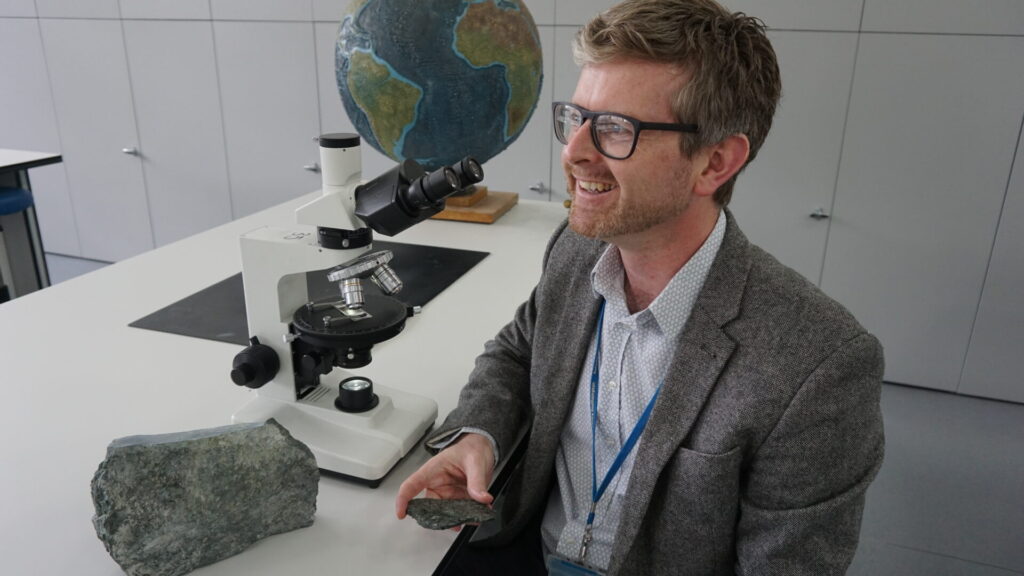
Above: Dr. Thomas Gernon.
Photo courtesy of University of Southampton.
Studying Earth’s icy periods
An ice age is a period when Earth cools, and polar ice sheets and glaciers expand. Scientists believe Earth has had at least 5 major ice ages in its 4.5 billion years, but they don’t know what causes them. “This question might seem simple,” Dr. Gernon says, “but answering it requires us to understand the full spectrum of interacting Earth and climate processes.”
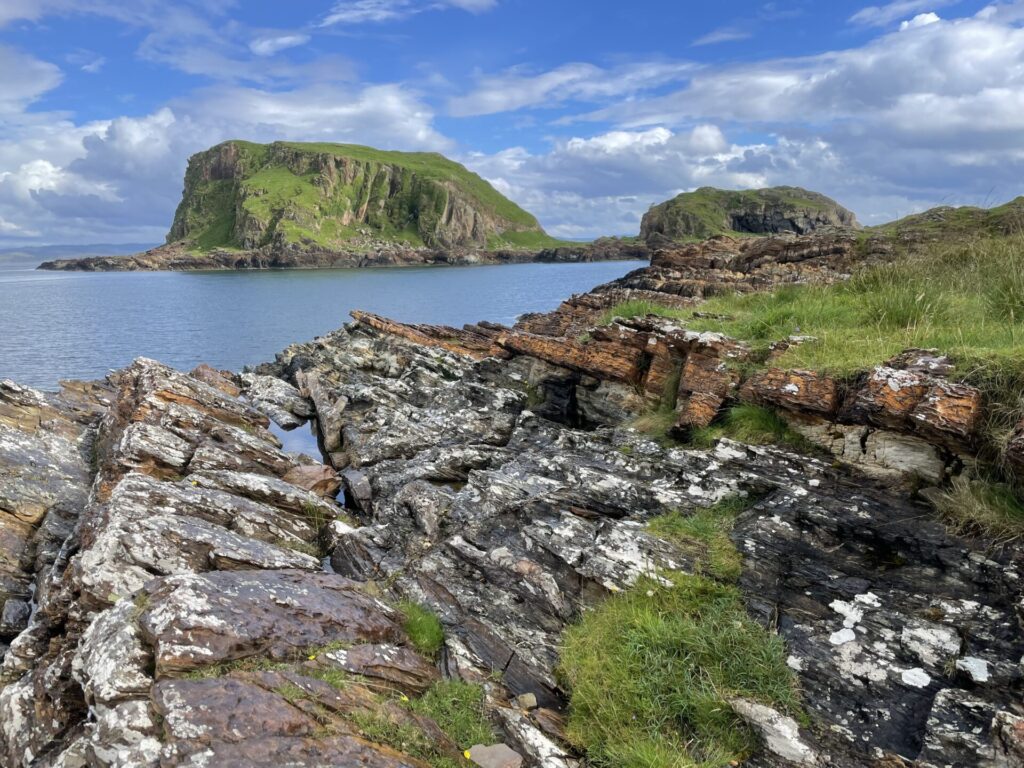
Above: The dipping rock sequences on the Garvellach Islands, Scotland. These rocks date to around 720 million years ago, recording the transition into a global state of glaciation called Snowball Earth. Photo courtesy of Tom Gernon.
Early interest and career evolution
Dr. Gernon’s curiosity about how the Earth works was inspired by a high school geography teacher who helped him on projects for Ireland’s Young Scientist Exhibition. He also found support at home. “My parents accompanied me across bogs, quarries, beaches, and mountains as I developed my projects,” Dr. Gernon says.
His geography teacher taught him to ask big questions and to keep switching topics. This deeply affected how he approached his university studies and his current research. “I quickly learnt how to transfer techniques between fields and the importance of breaking down complex problems into smaller parts to fully understand them,” he says. “My career has followed an unconventional route, exploring different sub-topics of Earth and climate science.”
This approach of working across sub-topics (or sub-disciplines) comes to life in Dr. Gernon’s Earth Intelligence Laboratory (EILAB). “We think and work across traditional boundaries and explore the interconnectedness of the Earth system,” he says. This includes adapting techniques from other fields. For example, the EILAB team is building a large computer model of how ice ages operate based on field observations and geological data.
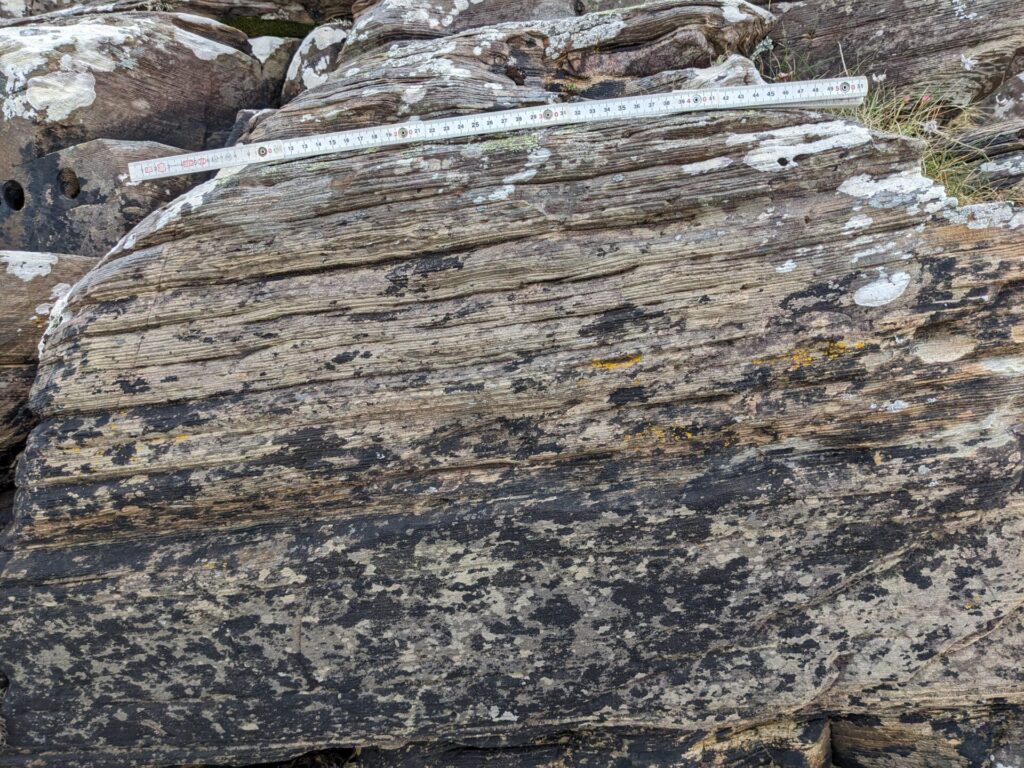
Above: Millimetre-scale layers called varves record year-to-year deposition and climate cycles during Snowball Earth. These rocks are exposed on the uninhabited island of Garbh Eileach.
Photo courtesy of Tom Gernon.
Groundbreaking discoveries
Dr. Gernon and his team have made discoveries that have changed what we know about Earth’s history. For one, his lab’s findings are challenging the long-standing idea that ice ages are triggered by a single cause. Their research shows that instead, ice ages happen when many processes act together. As Dr. Gernon puts it, “the long-term climate is set by a geologic orchestra, not a soloist!”
Now in its fourth year, the project “Decoding Cyclicity in Earth’s Ice Ages” has already yielded multiple discoveries. One recent groundbreaking finding relates to “Snowball Earth”—an ice age that took place 720 to 630 million years ago. It is called Snowball Earth because scientists believe the planet was covered in thick ice sheets that marched all the way to the equator. But one of Snowball Earth’s mysteries is that life survived through that period, which likely required open areas of flowing water.
To examine this, Dr. Gernon and his colleagues went to the remote Garvellach Islands off the coast of Scotland, where they found a rare set of rocks preserved from Snowball Earth. The patterns they found in these rock layers match modern-day climate cycles—not what they would expect if Earth had been frozen in ice. This indicates that there were likely periods during the ice age with areas of open ocean. These periods provided what Dr. Gernon calls “a ‘life raft’ for complex life to survive global glaciation [freezing].”
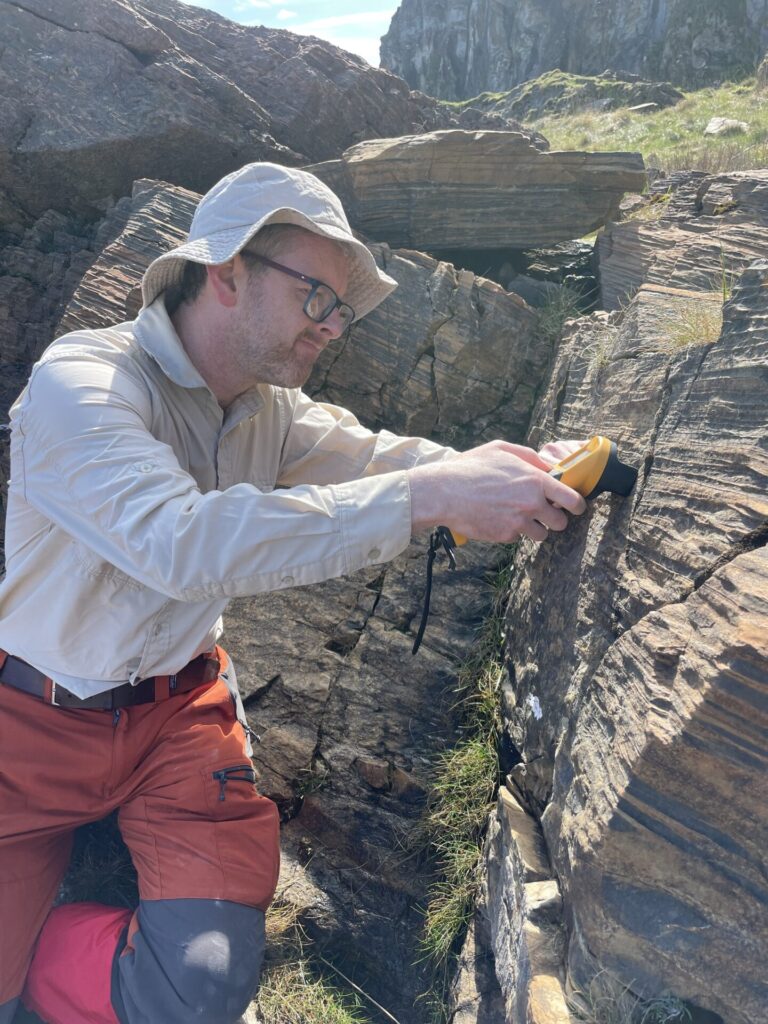
Above: Tom Gernon doing fieldwork on the Garvellach Islands, Scotland. Here he is using a magnetic susceptibility meter to record the magnetic signature of the rock layers through the sequence, which can reveal climatic oscillations.
Photo courtesy of Elias Rugen.
Present-day implications of the research
Understanding Earth’s past helps us to understand our present and future climate. “To me, the Earth’s past is a rich archive of nature’s ‘experiments’: some failed whilst others succeeded,” Dr. Gernon says. “Studying such experiments provides blueprints for how our own climate responds to major shifts in conditions.” For example, his team studies extreme weather over long periods of history. This helps us understand how Earth’s “planetary thermostat”—a mechanism that naturally cools the climate—responds to high levels of carbon dioxide in the atmosphere. “Essentially, we can learn from ancient successes to design modern, informed, and responsible solutions.”